A USD 1.2 billion AML penalty. The controls existed, but they were not working.
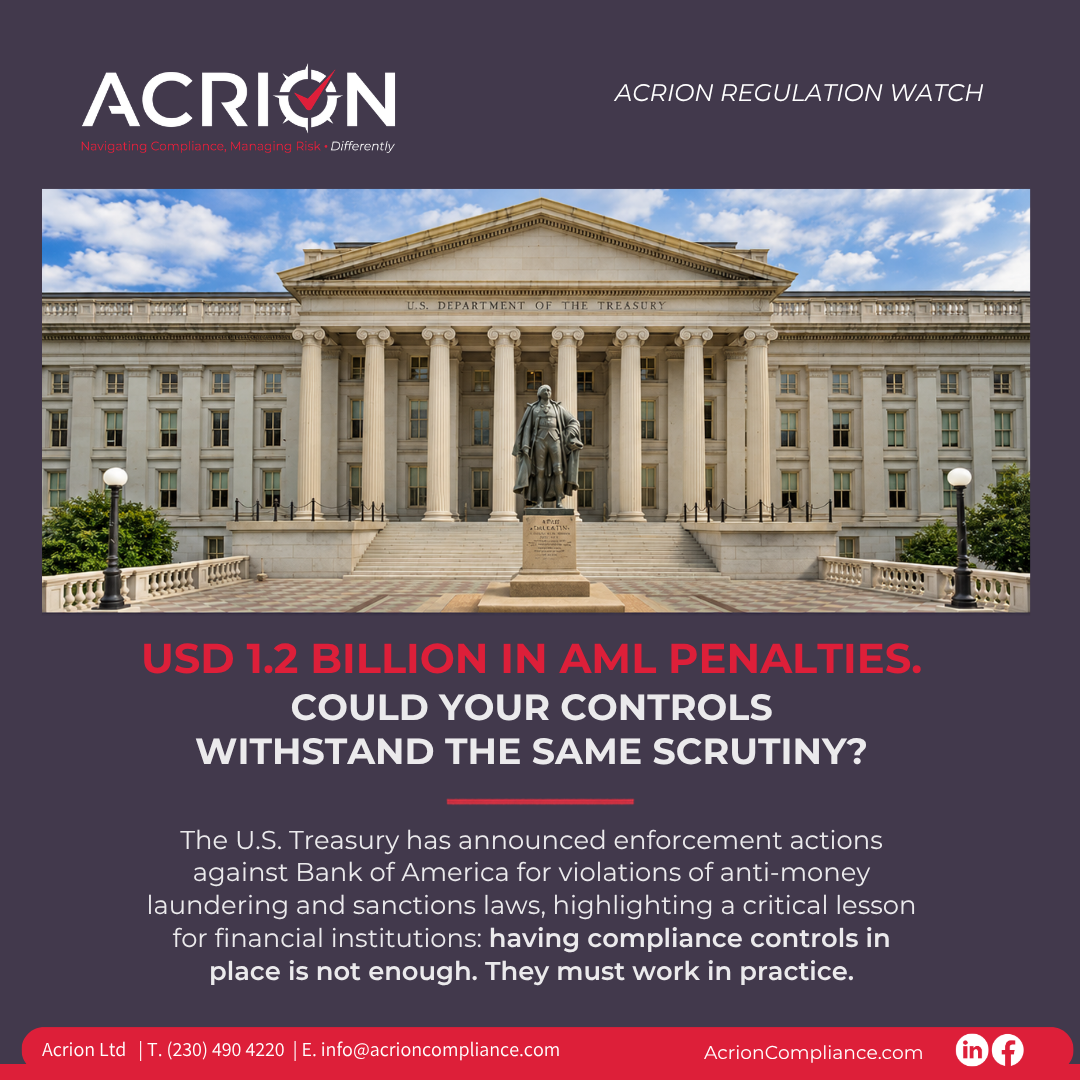
The U.S. Department of the Treasury announced enforcement actions imposing more than USD 1.21 billion in penalties against Bank of America, the second-largest bank in the United States, for violations of anti-money laundering and sanctions laws.
These actions include the third-largest penalty in Treasury history and the largest in the history of the Office of the Comptroller of the Currency (OCC).
What should financial institutions be asking?
✅ Transaction Monitoring: Does your transaction-monitoring system identify the risks associated with your actual business activities?
✅ Suspicious Activity Reporting: Are suspicious alerts investigated and reported promptly?
✅ Independent Audit: Does your independent audit genuinely test effectiveness, or mainly confirm that procedures exist?
Why does this matter?
The enforcement actions highlight an important distinction: having compliance controls in place does not necessarily mean they are operating effectively.
For financial institutions, the key question is not simply whether AML policies, monitoring systems and audit procedures exist, but whether they are effective in identifying, escalating and addressing financial crime risks.
📚 Read the U.S. Treasury announcement here: https://home.treasury.gov/news/press-releases/sb0657/
Acrion | Navigating Compliance, Managing Risks Differently.
Navigating Compliance. Managing Risk. Differently